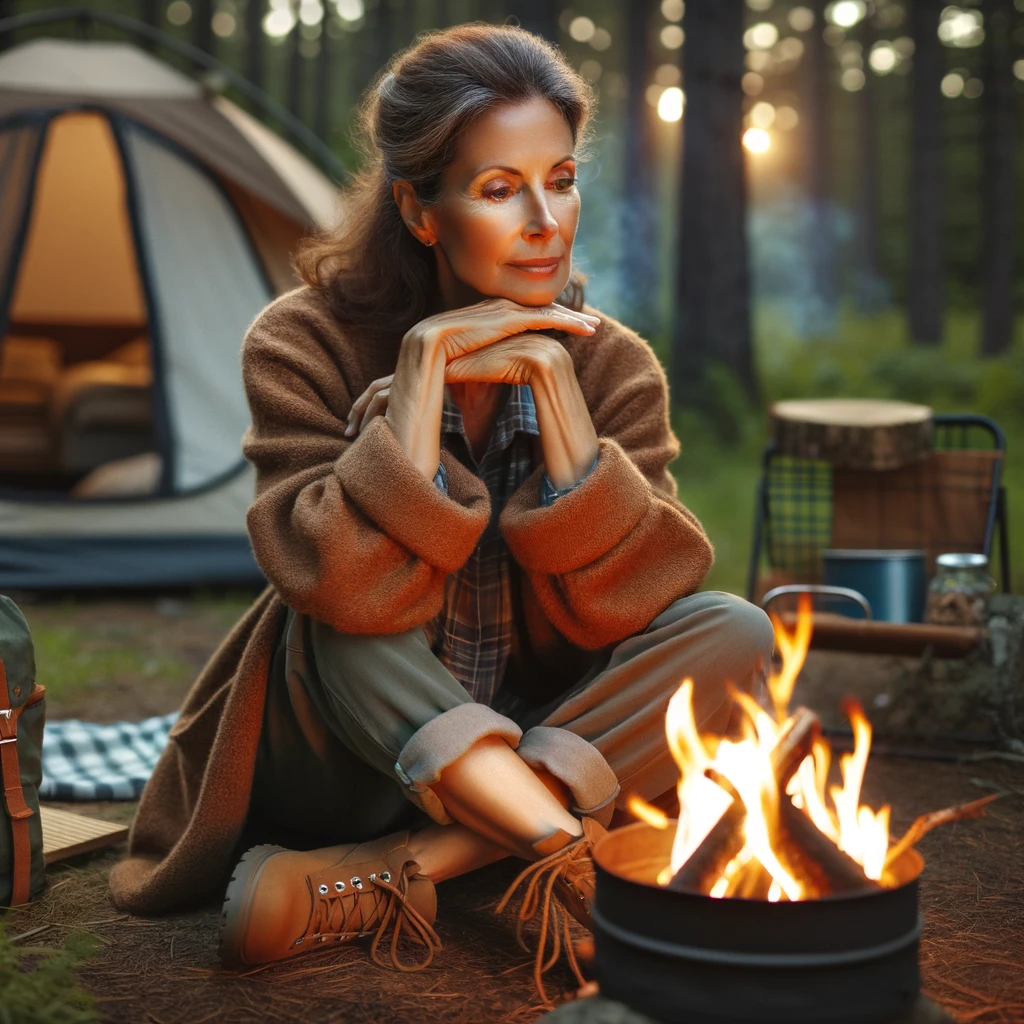
I didn’t set out to find clarity. I just needed a weekend away.
After decades of raising children, building routines, and supporting others, I realized I’d never actually campedalone. The thought terrified me… which is exactly why I went.
That first trip—just me, a trail map, and a borrowed tent—marked the beginning of something sacred: solo camping with a purpose. And if you’ve never tried it, I truly believe you should. Not because it’s trendy or aesthetic, but because it reveals a version of you that everyday life often drowns out.
“You don’t know what the forest will show you—until you step into it alone.”
[content-egg module=CjProducts]
What Does It Mean to Camp With a Purpose?
Solo camping isn’t just about independence. It’s about intentionality.
Whether you’re grieving, recovering from burnout, entering a new life season, or just seeking quiet, solo camping gives you the space to hear yourself think again. You don’t have to prove anything. Just be.
Purpose-driven camping means letting nature support your process—whatever it is. And the science backs it up. Studies have shown time in solitude can lower cortisol, improve mood, boost creativity, and reconnect us to meaning.
For me, it was healing. For you, it might be clarity. Direction. Forgiveness. Or just the joy of being free from the noise.
[content-egg module=Ebay2]
The Fears That Keep Us From Going Alone (And Why They Shouldn’t)
Before my first solo trip, I had a litany of worries:
What if something goes wrong?
What if I get lonely or scared?
What if I can’t handle it emotionally?
Spoiler: I was scared the first night. I barely slept. But by morning, when the light cut through the trees and I made coffee in silence, something in me shifted.
Fear, I learned, is a compass. And when we move toward it with care and preparedness, we find courage waiting on the other side.
“The first time I camped solo, I didn’t sleep well—but I woke up stronger than ever.”
How to Choose a Purpose for Your Trip
You don’t need a grand mission. Just a heartfelt one.
Start by asking: “What do I need right now?” or “What part of me needs space to speak?”
Your purpose could be:
Grieving someone you’ve lost
Celebrating a milestone
Ending a season and beginning a new one
Finding inspiration for a creative project
Simply learning to enjoy your own company
Whatever it is, let it guide how you camp, where you go, and what you allow yourself to let go of.
Simple Setup, Deep Impact: Gear Tips for Solo Campers
Camping alone means ease and simplicity are your friends. Here’s what I always bring:
Places with ranger access and cell reception for safety
Nearby locations so you don’t overthink logistics
Some of my favorites include:
Pisgah National Forest, NC – shaded groves with soft moss underfoot
Custer State Park, SD – wide-open skies and reflection-worthy silence
Hocking Hills, OH – waterfalls and stone ledges that make you feel
Check local apps and websites like The Dyrt or iOverlander to scout the right fit.
What to Expect When You’re Alone in Nature
It may be awkward at first.
You’ll reach for your phone. You’ll talk out loud. You’ll check your watch every 10 minutes. And then… something clicks.
Suddenly, the wind isn’t background noise. It’s the soundtrack. The woods aren’t empty—they’re holding you. And the stillness? It becomes a kind of sanctuary.
Let it wash over you. You’re being met, even if no one else is around.
Reflecting After the Trip: What the Forest Told Me
I always spend the last hour of my solo trips doing one thing: sitting.
What do I want to carry back with me into the world?
Sometimes I journal. Sometimes I just breathe. But that ritual of reflection has brought more clarity than a year’s worth of podcasts and planners.
Closing Thoughts: The Version of Me I Found Out There
I didn’t go solo camping to prove I could do it.
I went because I needed to remember who I was when no one was watching. I needed to light a fire without anyone’s help. I needed to feel small under a sky full of stars—and powerful because I chose to be there.
So here’s my heartfelt nudge: Try it. Once. Just once.
Not to be alone—but to finally come home to yourself.
“You’ll never know what you’re capable of until you go. The trees are waiting—and so is your truest self.”